
Home Affairs
Home Affairs, the South African identification organisation, has a history of offering inconvenience with their services due to long queues at branches and offline systems. Their identification services are among the most frequently used, and creating a sufficient e-service mobile platform for their ID services is more important than ever to improve accessibility, efficiency, and user experience.
Role
UX/UI Designer
Year
2024
Platforms
Mobile App
Industry
Government
Task
Home Affairs is known for the high number of people who visit their branches daily to access essential services, particularly ID applications. This has often led to long queues and delays, causing inconvenience for citizens. The task was to research and design a mobile application that enables users to conveniently apply for a Smart ID card remotely, reducing the need for in-person visits and improving the overall service experience.

Design Process

Initial Research
Research was conducted through interviews with individuals who had previously undergone the ID application and renewal process at Home Affairs. A structured set of questions was used to ensure consistency and to validate the data collected from participants. Their responses offered valuable insights and personal perspectives on their experiences with the service.
The interviews were conducted both in person and via online video calls to identify the main challenges and pain points encountered during the process. From the information gathered, three key categories of findings emerged, focusing on the overall process of applying for a Smart ID.

Persona & Journey Map
A persona was created based on the research conducted, representing the typical user’s experience when applying for an ID card. The user journey map outlines the persona’s activities, goals, and pain points, helping to identify opportunities for making the ID application process easier, more efficient, and convenient.


App Flow
The app flow was designed to simplify and streamline the Smart ID application process by addressing the major pain points identified during research, such as long queues, unclear procedures, and time-consuming manual steps. The flow focuses on guiding users through a seamless, step-by-step digital experience that reduces the need for physical branch visits.

Elements
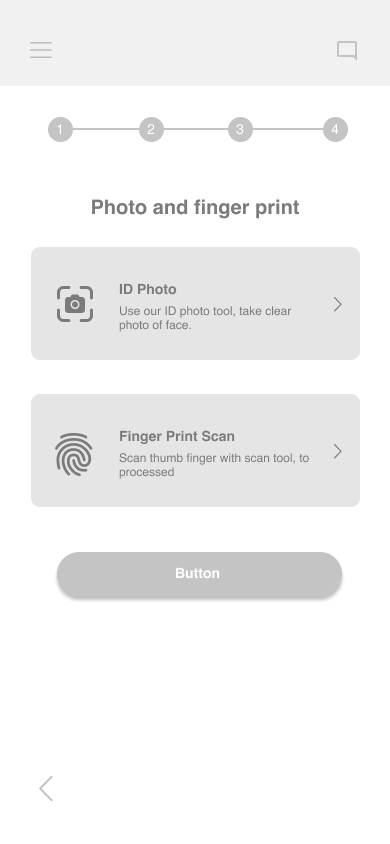
The layout uses structured card components and clear section divisions to present information in an organized way. Icons and progress indicators are used to guide users through each stage of the application process, ensuring that actions and statuses are always visible and easy to understand.


Wireframe




Prototype




Discover More


